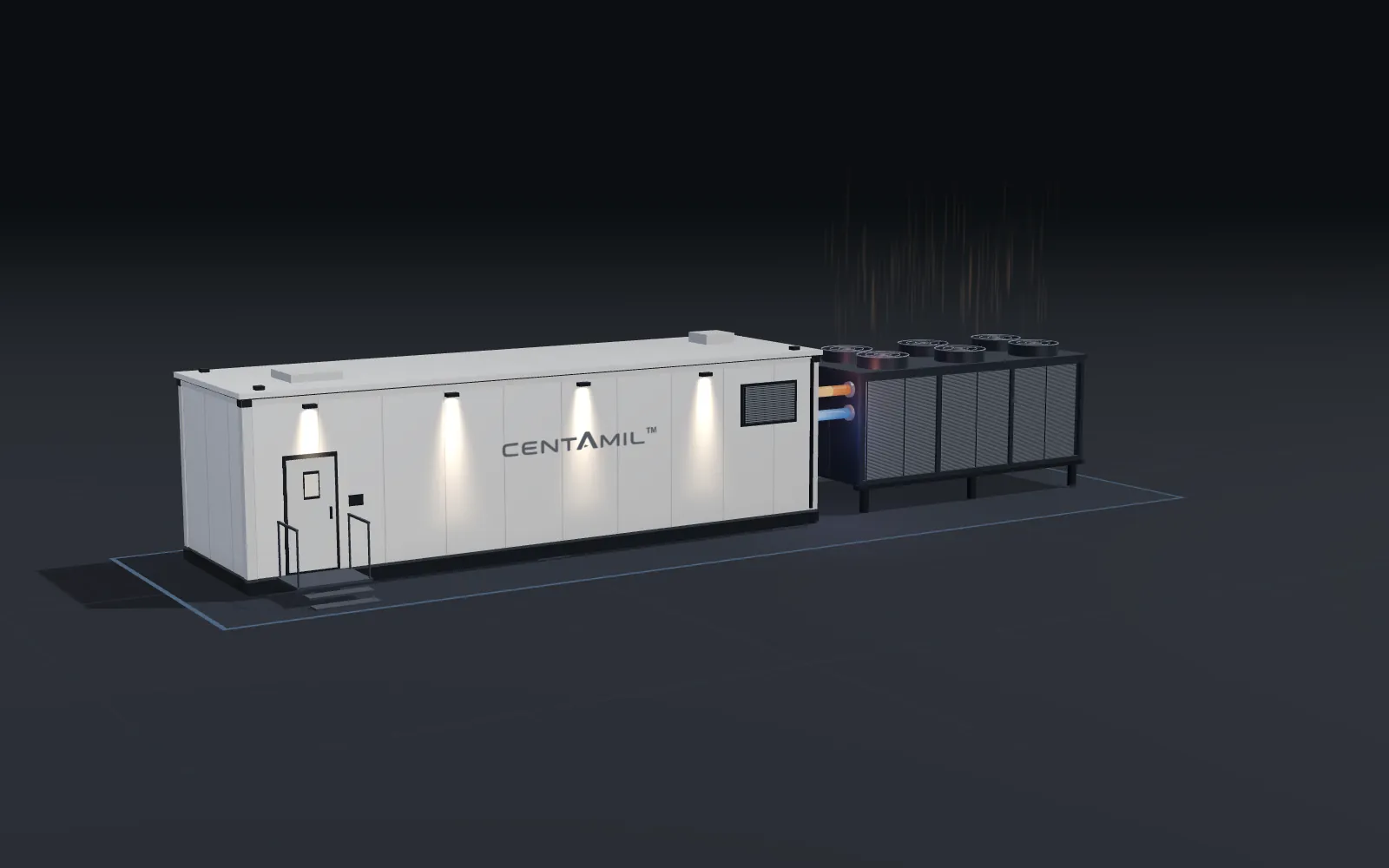
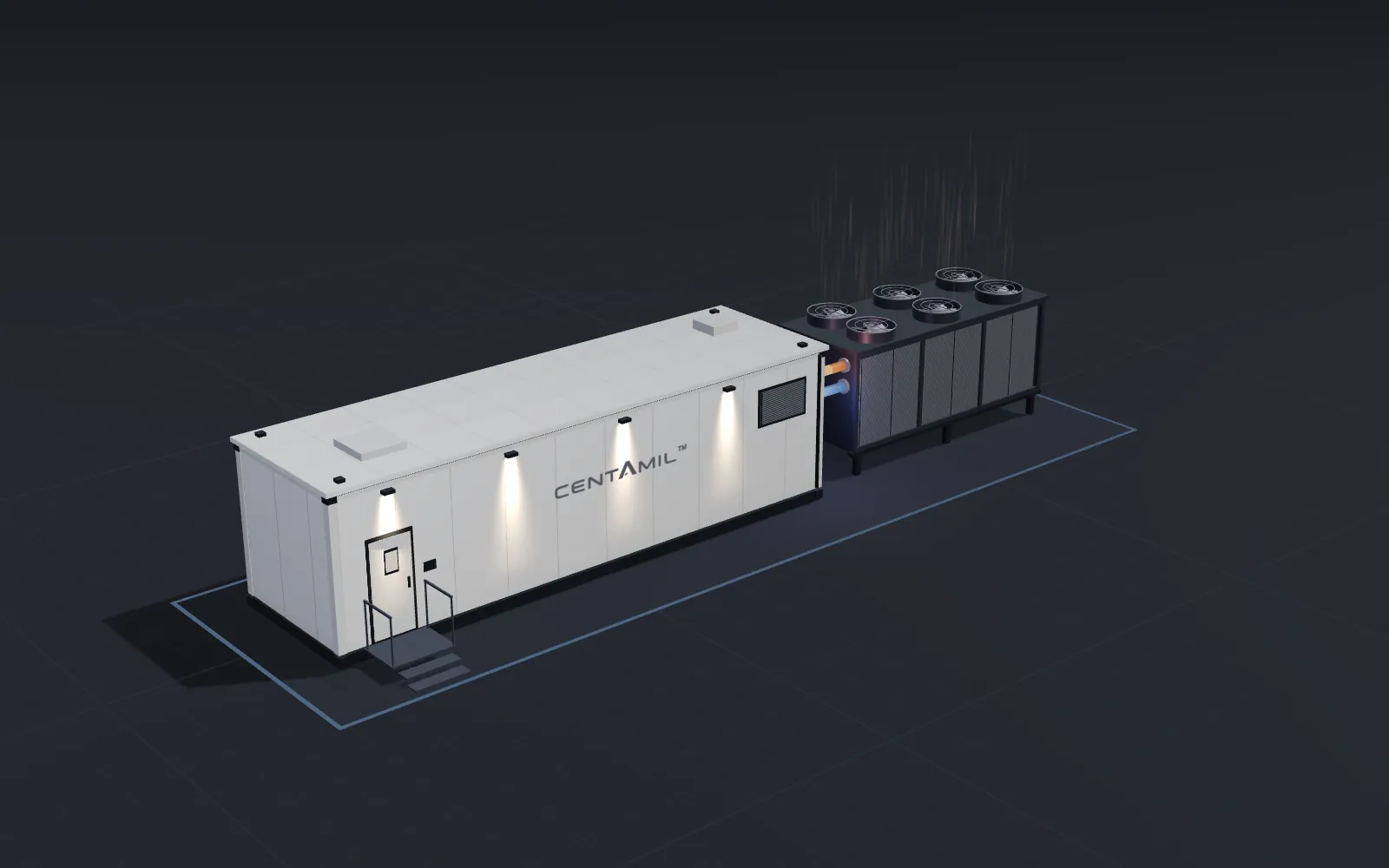
Centamil designs the 1 MW white shell: a factory-built, liquid-cooled data-centre module that rejects its heat to dry air. No cooling towers, no make-up water, and a design PUE below 1.15.
Compute is becoming a region’s biggest new load on power and water.
Most AI capacity is cooled by chillers and evaporative towers. A site like that runs at a PUE of about 1.35, so it draws about 35% more power than its computers use. It also evaporates about 1.8 litres of water for every kilowatt-hour of computing.
Telangana alone expects 8–10 GW of data-centre capacity around Hyderabad, against more than 300 MW operating today. At that scale, every point of PUE and every litre per kilowatt-hour becomes a permanent demand on the grid and the reservoirs.
What it takes to run one kilowatt-hour of computing
Chiller and evaporative coolingTypical of sites running today
Computing 1.00 kWhCooling and losses 0.35 kWh
1.8 L of water evaporated
Centamil white shellDesign target
Computing 1.00 kWhCooling and losses under 0.15 kWh
0 L of make-up water for cooling
Basis: a PUE of 1.35 and 1.8 litres per kWh are typical figures for chiller-cooled and evaporative-cooled sites. White-shell figures are design targets; each drop above is 0.1 litre. Capacity figures are from Government of Telangana statements in 2026.
Follow one megawatt of heat.
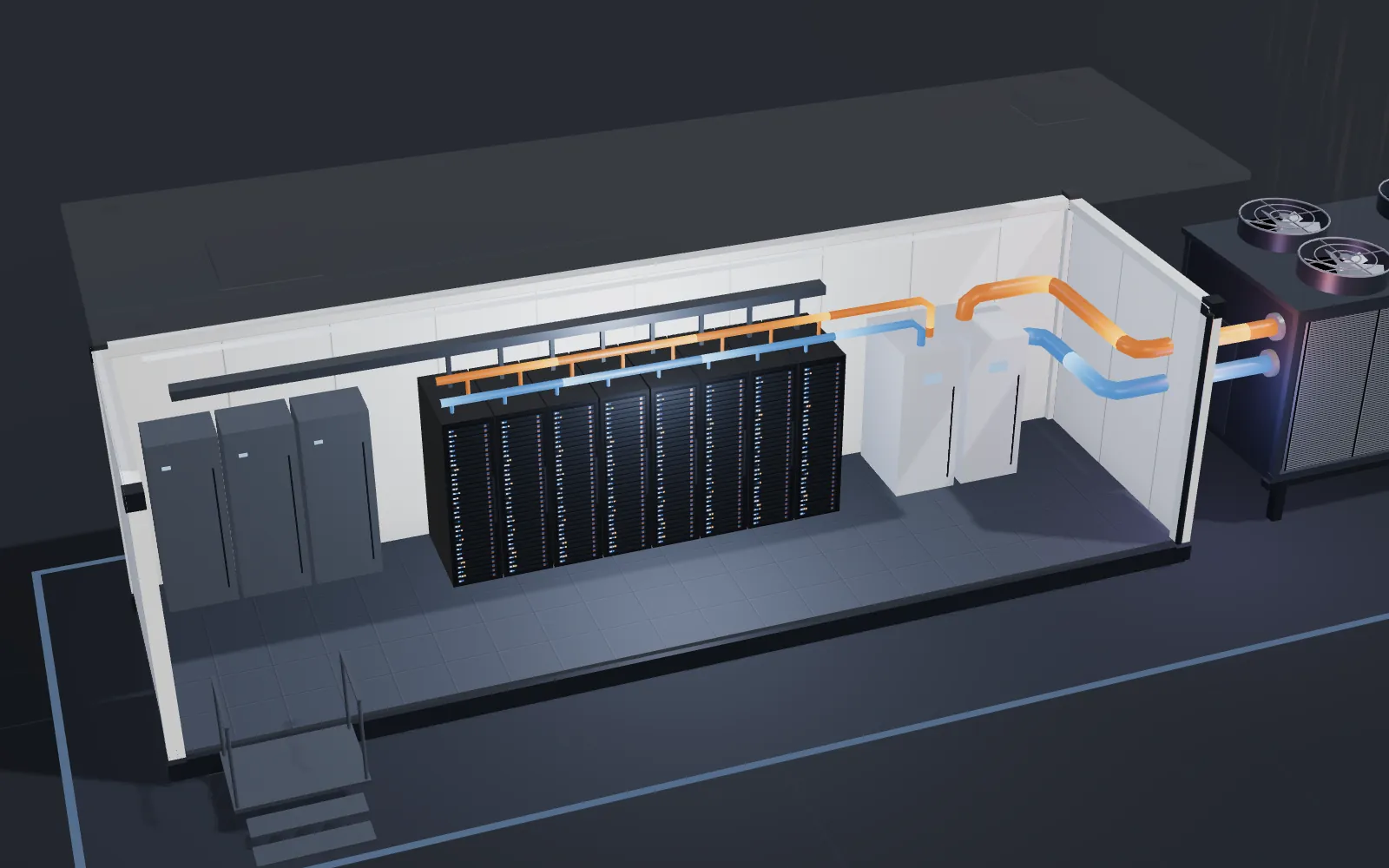
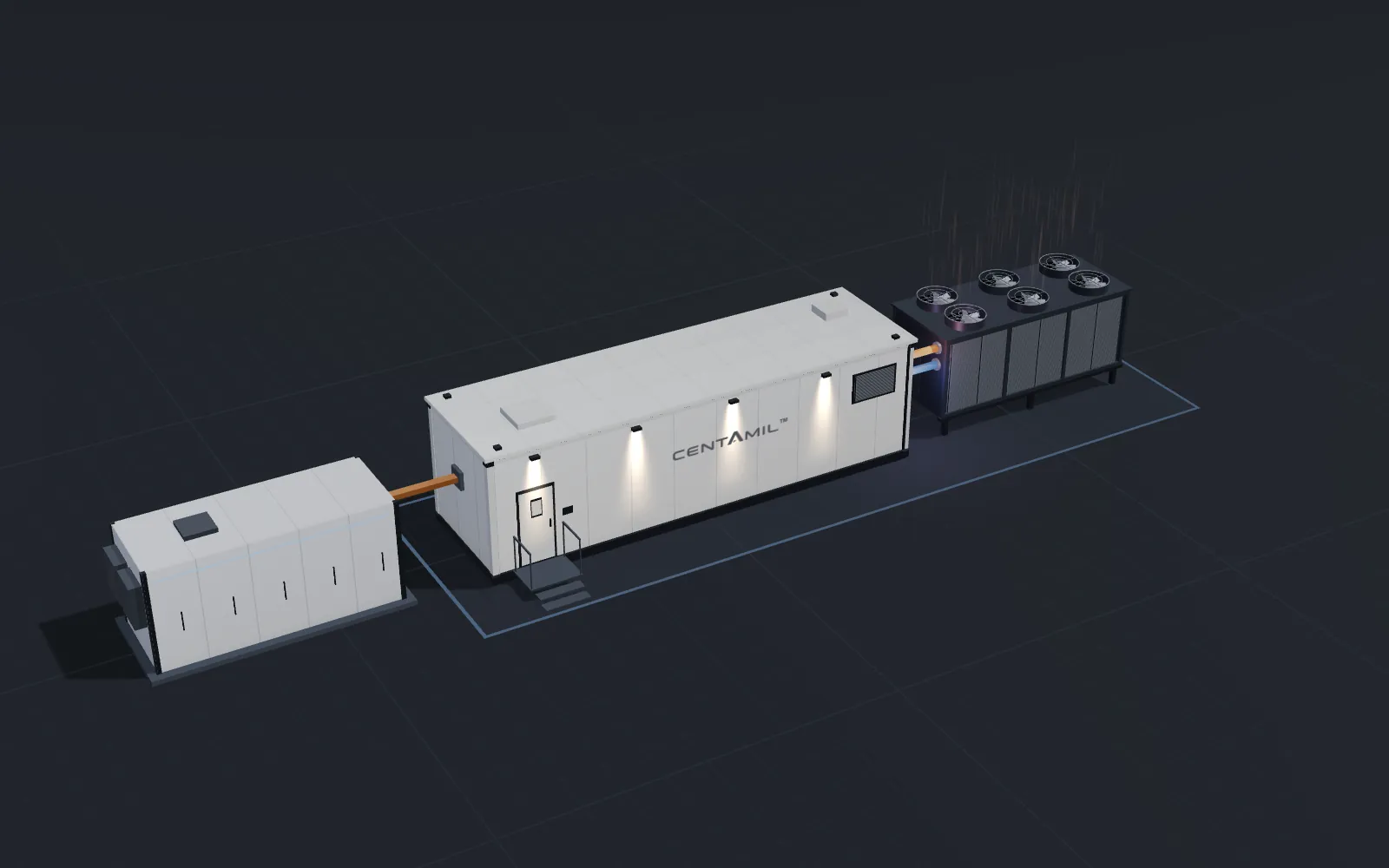
Every watt a chip draws leaves it as heat. In a white shell that heat leaves in liquid, travels a sealed loop, and ends in dry air.
Off the chip, in liquid
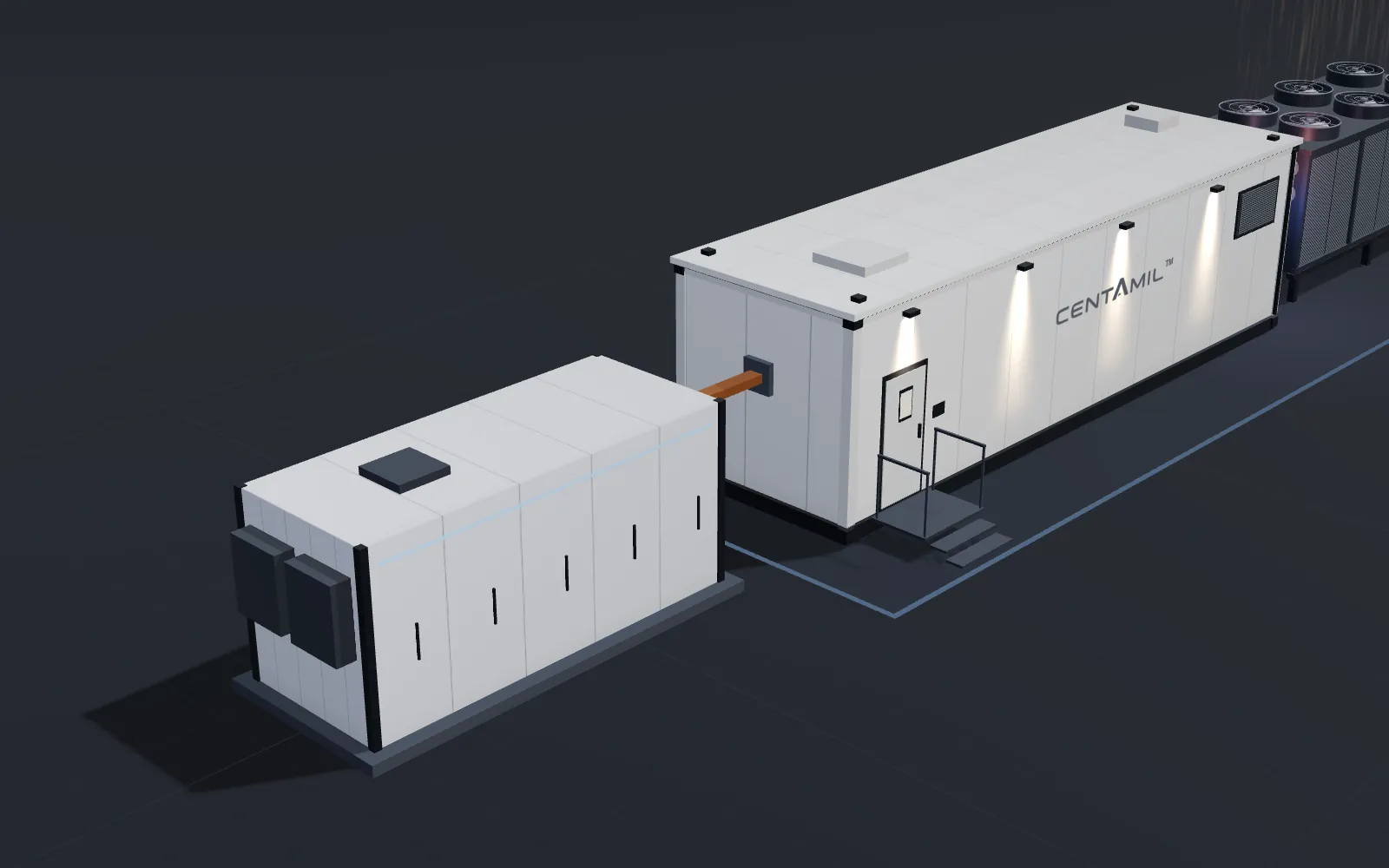
Direct-to-chip cold plates take the heat off the processors, and coolant distribution units move it on. Racks run at up to 130 kW each. One shell holds seven or eight.
Through a sealed loop
The facility loop is closed. It is filled once and topped up by less than 1% a year. There are no cooling towers and no evaporative pads.
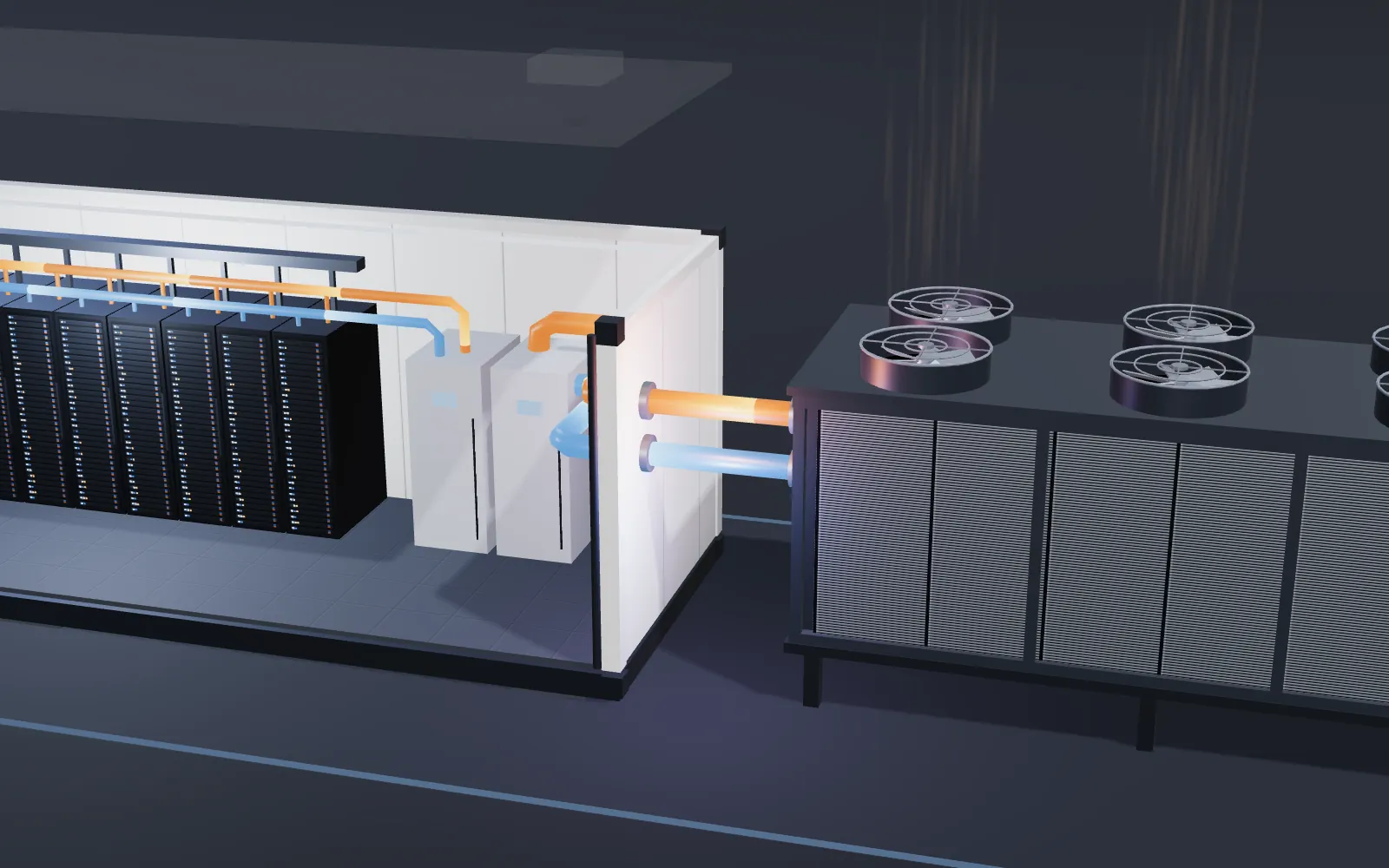
Out to dry air
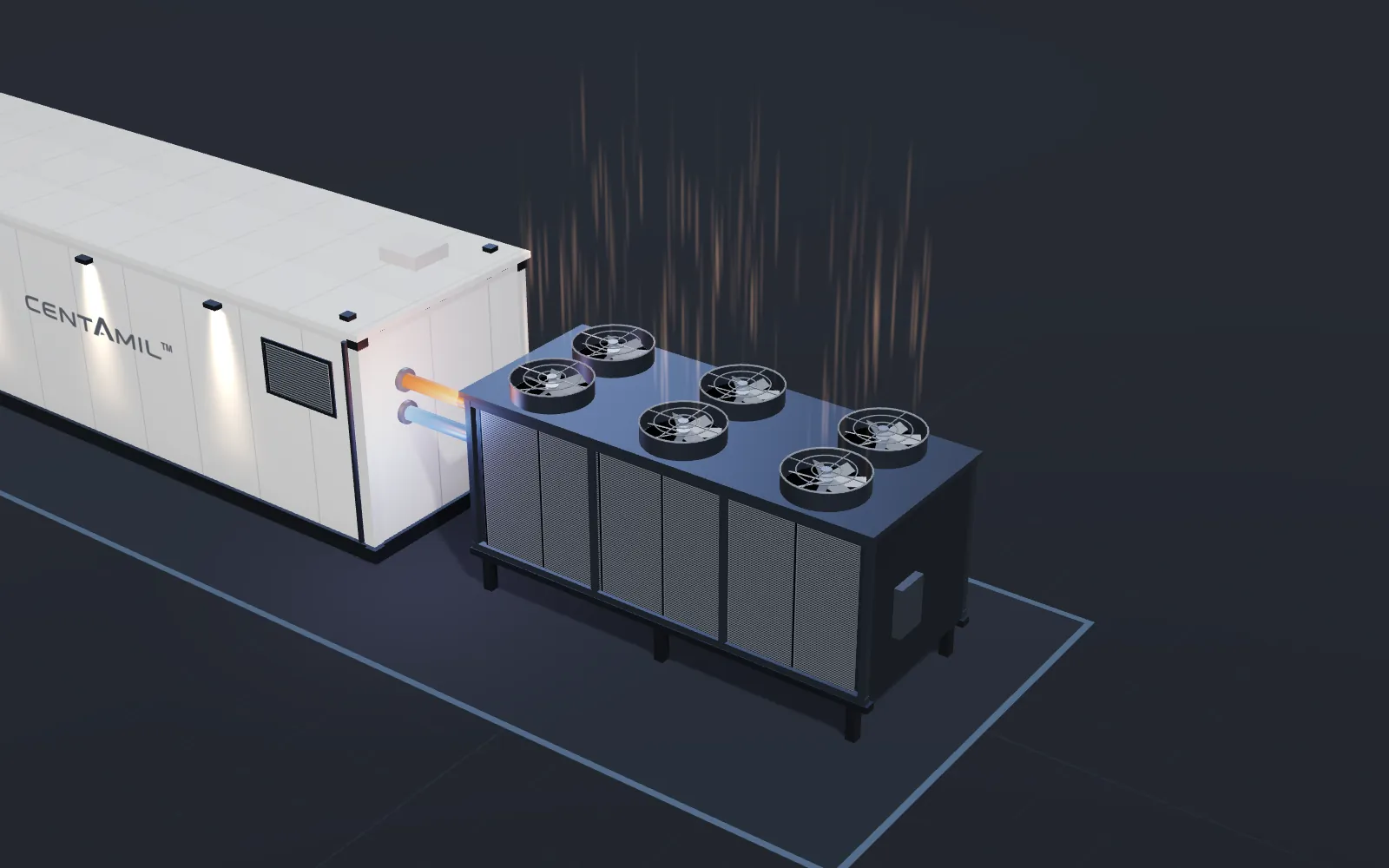
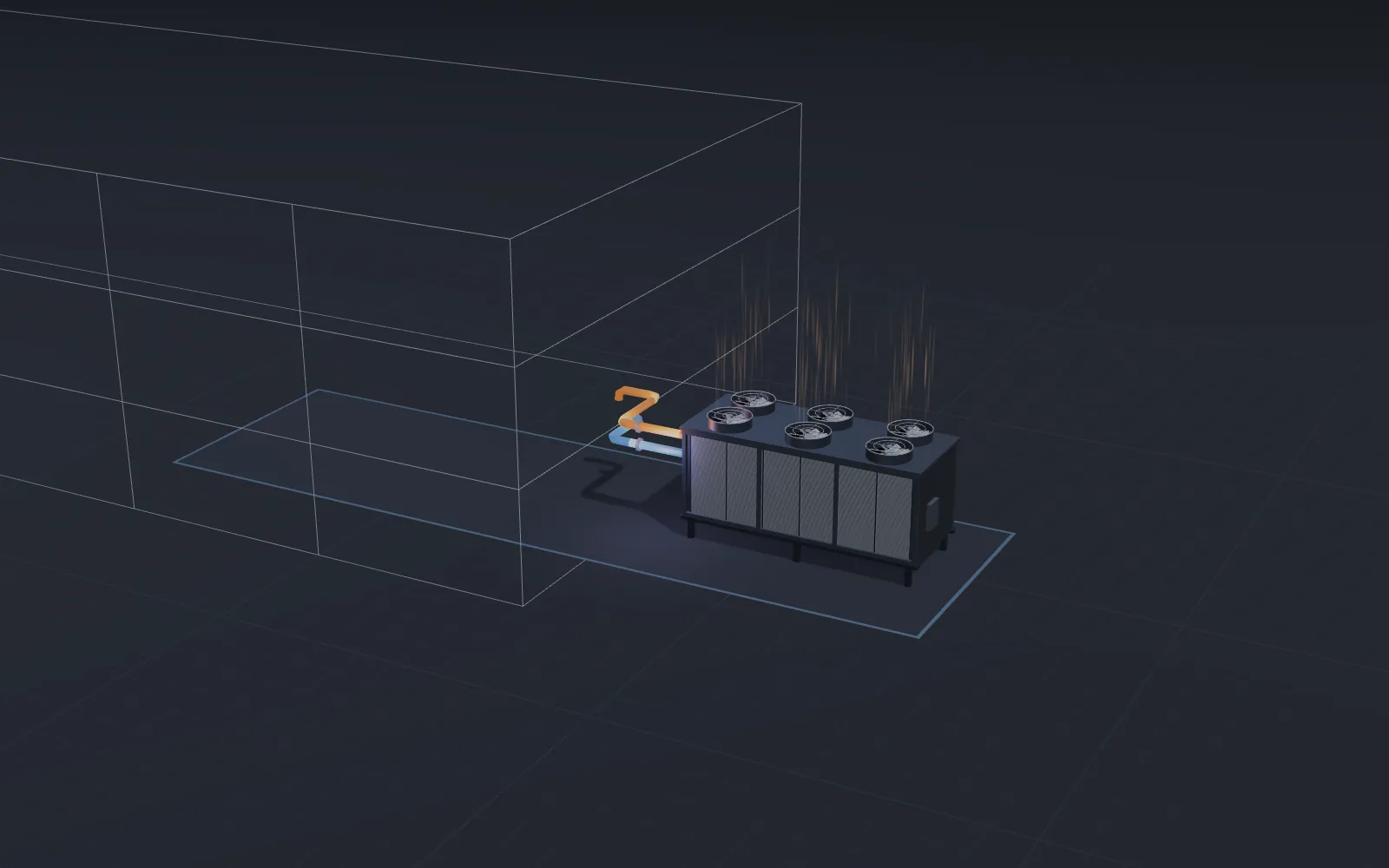
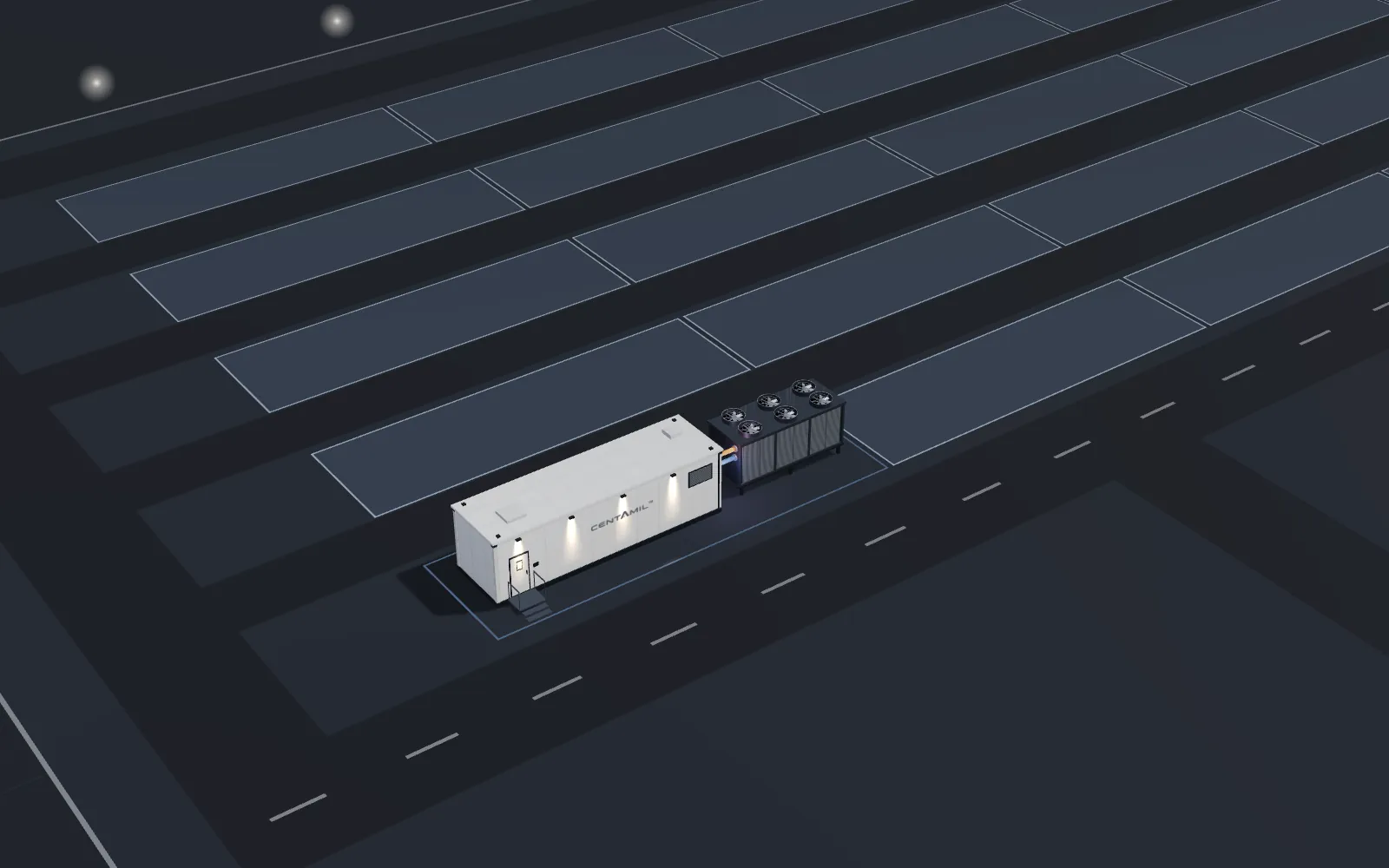
Each shell has its own dry heat-rejection unit. Fans draw ambient air across the coils and the heat leaves as warm air. Nothing evaporates, so cooling needs no make-up water. With no compressors on the main cooling path, the design PUE is below 1.15.
Power on a DC bus, with storage
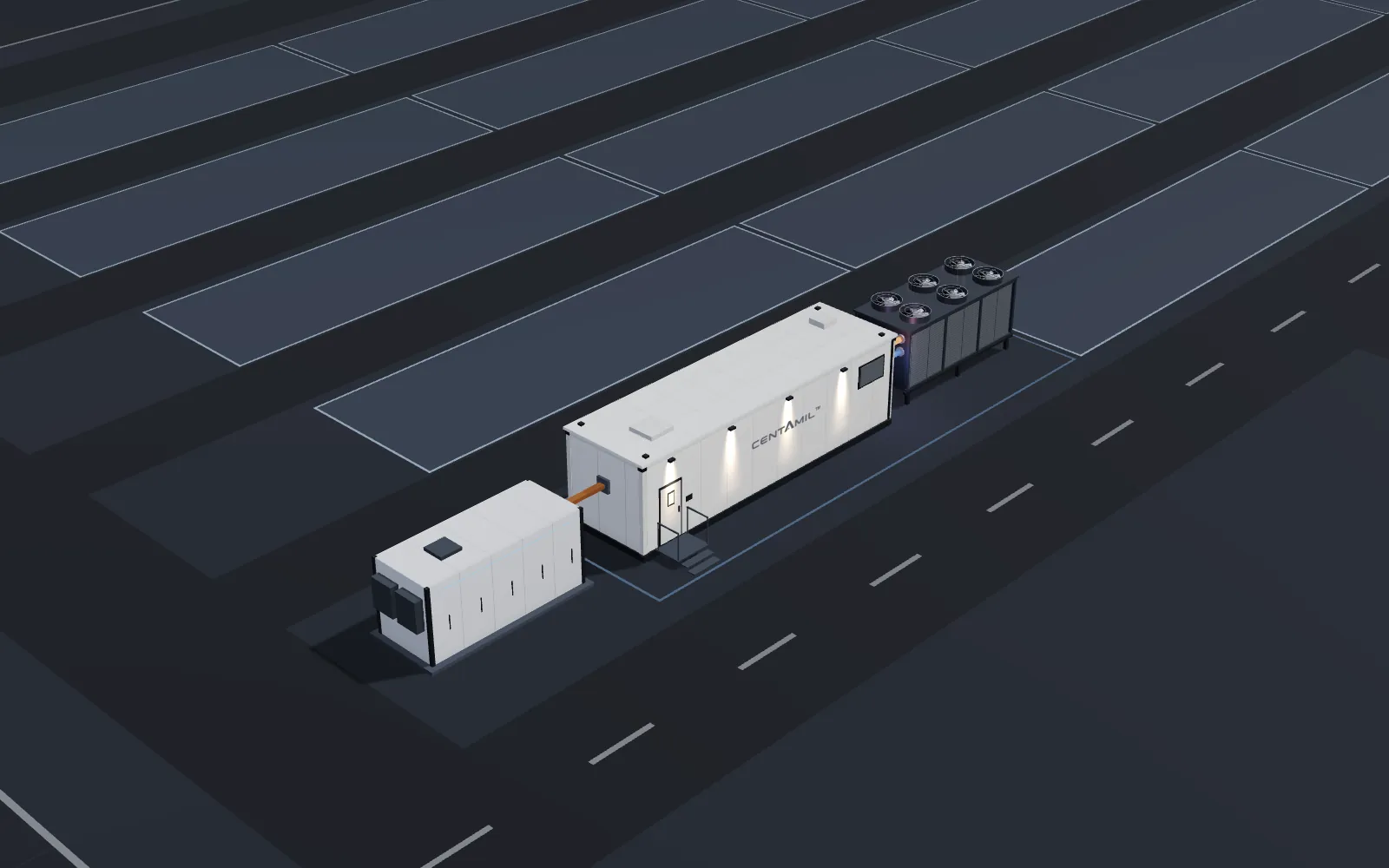
Batteries sit on the shell’s DC bus, in line with the 800 V DC direction of AI racks. They carry short outages, firm the site, can support the grid, and cut generator run hours.
Built in a factory, metered on site
A shell is factory-built, delivered and commissioned in months. Customers add their own compute racks. Power and water are metered at every unit, and we will publish measured performance from our first installations.
AI racksup to 130 kW each
Coolant distribution units
Warm return
Cool supply
Dry heat-rejection unit0 L make-up water
Battery storageDC-coupled, about 4 MWh
DC bus
Metered at the unitPUE and water
Design targets. Illustration, not to scale.
One megawatt, as a unit you can order.
We supply the white shell: enclosure, power distribution, liquid cooling, dry heat rejection and storage integration. You bring the compute.
Direct-to-chip liquid cooling with coolant distribution units, on a sealed facility loop
Heat rejection
One dry heat-rejection unit per shell. No cooling towers, no evaporative pads
Make-up water for cooling
0 L
PUE
Below 1.15, annual design target
Design ambient
45 °C dry-bulb
Power
DC bus at the unit for storage coupling, aligned to 800 V DC racks
Storage
DC-coupled battery, about 4 MWh at a 1 MW unit
Backup
Battery ride-through, with N+1 standby generators
Resilience target
Concurrently maintainable power and cooling paths
Monitoring
Building and power management systems; PUE and water metered at each unit
These are design targets. We will publish measured performance from our first installations.
What it saves in a year.
Set the size of the build. Each square below is one megawatt; each block of 25 is a campus like the one we propose in Telangana.
MW of AI capacity, built as white shells
1 MW101001 GW
Power saved a year
1.75 million kWh
Water not consumed a year
15.8 million litres1.58 crore litres
Peak grid demand avoided
0.2 MW
Illustrative, against a chiller-cooled baseline of PUE 1.35 and evaporative water use of 1.8 litres per kWh of IT energy, with the white shell at its design PUE of 1.15 and at full IT load all year.
Proposed, subject to approvals
Twenty-five megawatts on four acres, built one megawatt at a time.
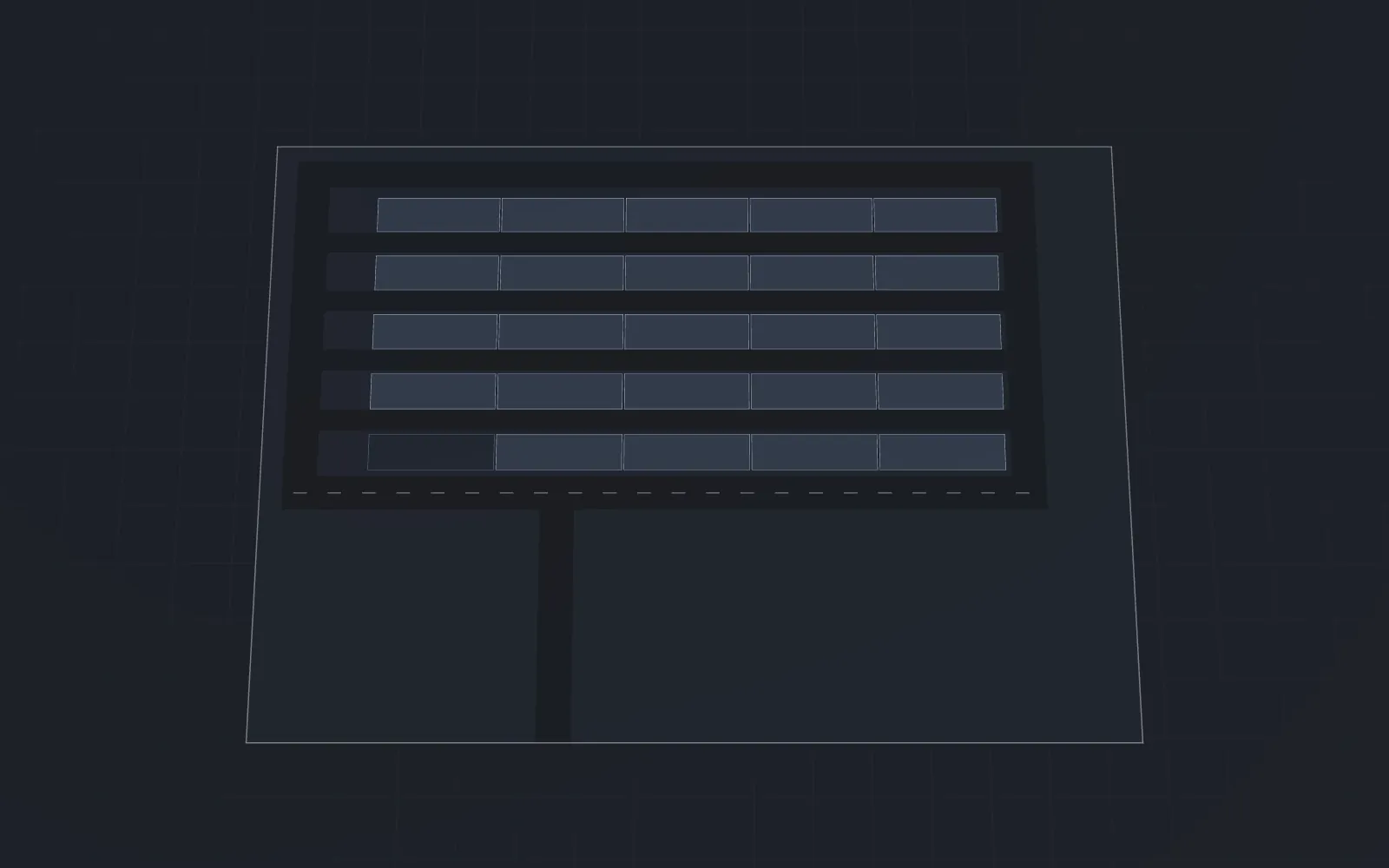
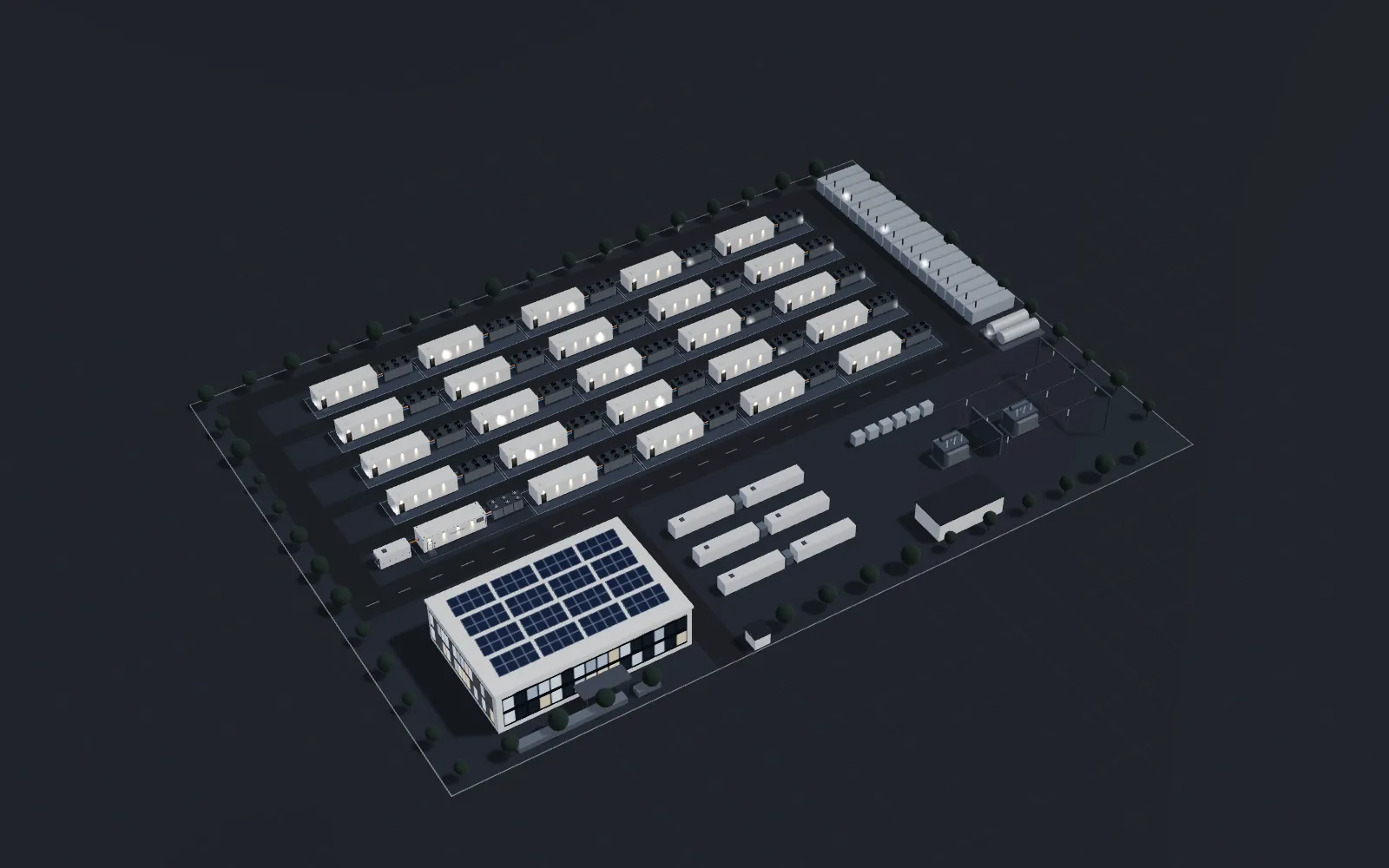
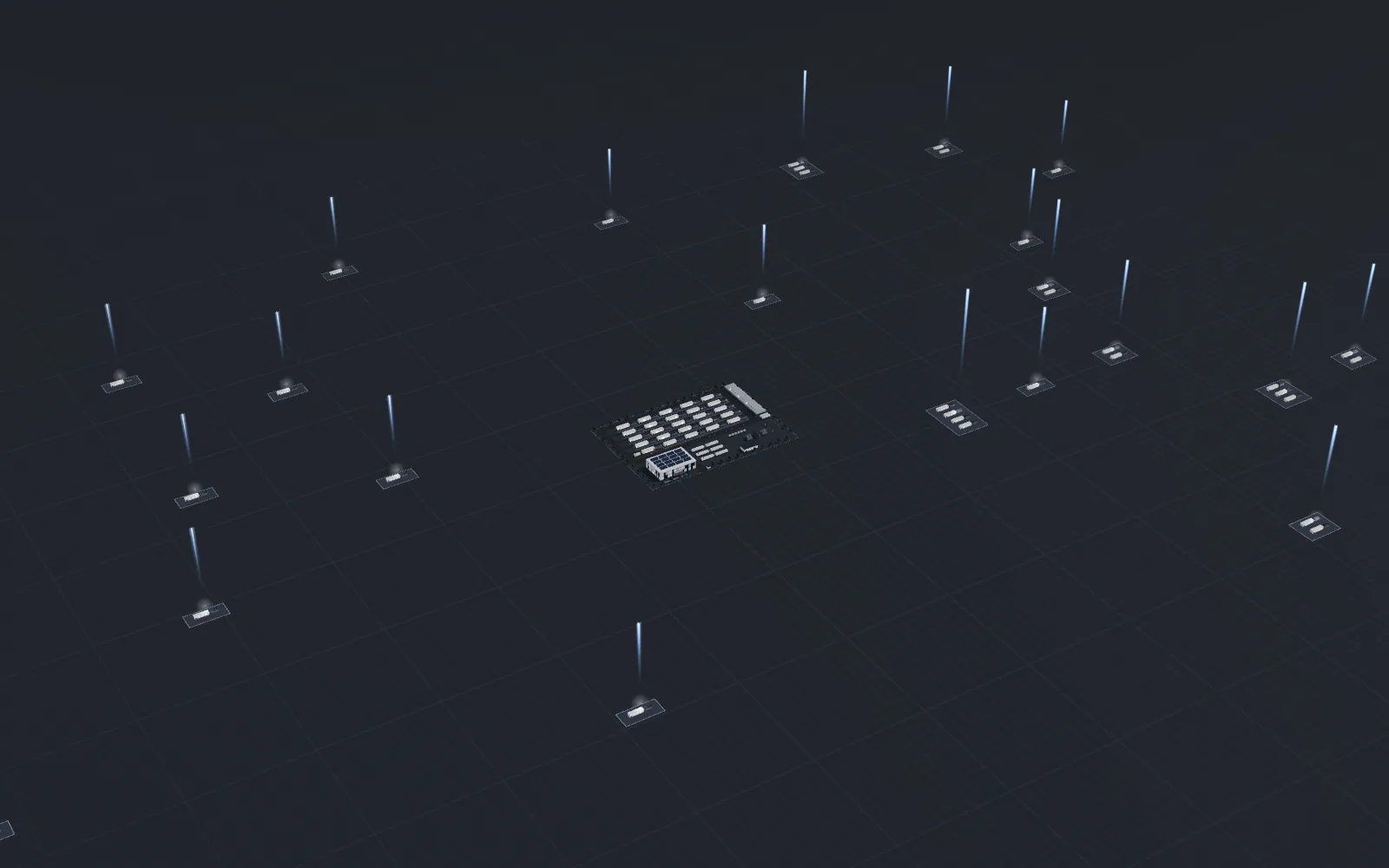
We are proposing a 25 MW reference campus at Bharat Future City, Telangana: 25 white shells, each with its own dry heat-rejection unit, sharing power, storage, backup and fibre.
Phase 1, January to June 2027
Start with a retrofit
We fit our dry heat-rejection outer loop to an existing data centre in Hyderabad, then measure and publish the water and power it saves through the summer of 2027.
Phase 2, fourth quarter of 2027
The first megawatt
The first commercial white shell at Bharat Future City: liquid-cooled, with no make-up water and a design PUE below 1.15.
Phase 3, 2028
Storage, and fully dry
We add DC-coupled grid-scale storage, and move to 100% dry heat rejection all year, with no trim chillers.
Phase 4, 2028 to 2030
Twenty-five megawatts
The site grows in blocks as compute partners commit, with its own substation, battery storage, standby generation and an operations centre with a visitor gallery.
Phase 5, from 2028
A production line for India and export
A Centamil production facility in Telangana assembles white shells with local vendors, for our own campus and for clients in India and abroad. Many of those sites will be small, a megawatt or a few, close to the people who use them.
Existing data centre
Centamil dry heat-rejection loop
The first megawatt
DC-coupled storage
25 white shellsone dry unit each
132/33 kV substation
Battery storage
Standby generation
Operations and demo centre
Private sites0.5–5 MW
1MW online
End of 2027, planning case
Indicative layout, not to scale. Subject to land allotment and approvals.
See it running before you order.
The campus is planned to host AI compute for our partners and to double as a working showroom. Buyers considering a white shell can visit, watch units run through a Telangana summer, and read the published PUE and water data.
Built with Telangana vendors.
Each shell is built with local vendors, first for our own campus and then for clients in India and abroad. We also plan a technician programme in liquid cooling and data-centre operations with local institutions.
Steel enclosures and skids
Electrical panels and busways
Piping and manifolds
Dry-cooler assembly
Battery-rack integration
Fire detection and suppression
Civil works
Transport and installation
If you already operate a data centre
Start with the outer loop
Our dry heat-rejection outer loop also retrofits into existing data centres, to cut their water use. It is where our own programme starts in 2027.
Banks, insurers, capital-market firms and government departments increasingly have to keep data and AI workloads on infrastructure they control. In India the drivers are RBI data-localisation rules, the DPDP Act, CERT-In directions and sovereign AI programmes. That means many small, secure data centres of 0.5–5 MW, close to their users. A water-free, modular 1 MW unit is built for that.
Centamil Ltd is an IP licensing and design house in Masdar City Free Zone, Abu Dhabi. We design the system and hold its IP: the dry heat-rejection loop and the modular 1 MW unit, with direct-to-chip cold plates developed with Hayagreeva Inc.
We build with partners. Local fabricators make the shells, operators and compute providers run them, and financiers fund them, through a project company formed in each market.
CentamilDesigns the technology, owns the IP and licenses it to the project.
Local project companyFormed with financial, compute and equipment partners. Invests in, builds and operates the sites.
Vendors and clientsLocal vendors build the shells. Clients host their compute, or buy shells of their own.
Praveen Kumar Gorakavi
Founder and CEO
A chemical and embedded-systems engineer who has transferred 28 technologies to international companies, including Unilever, L’Oréal and Philips Healthcare. Forbes 30 Under 30 honoree, National Science Medal winner and recipient of a President of India award.